
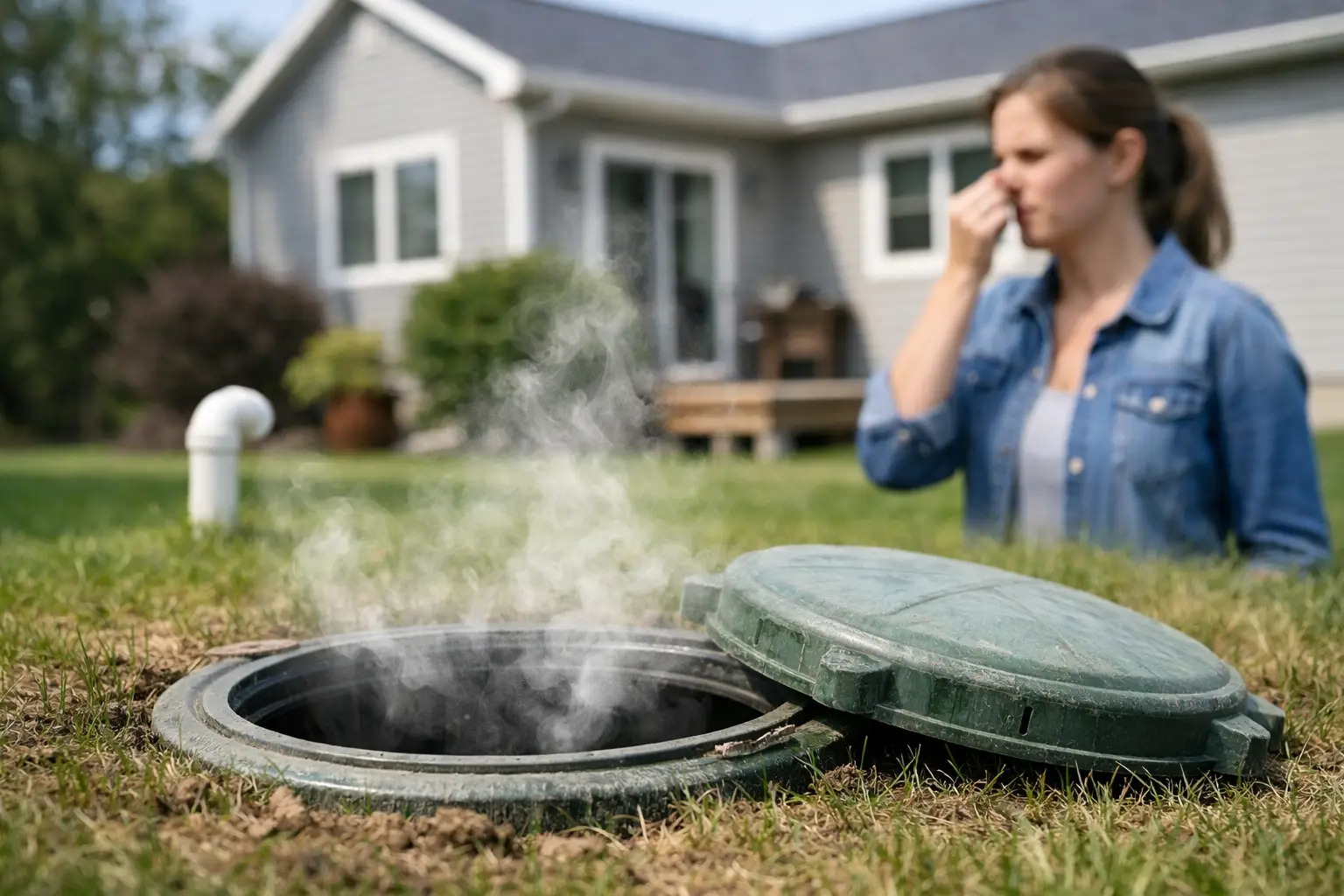
A septic tank smell outside house is not something to ignore, especially when it is new, getting stronger, or showing up near the tank, drainfield, or home. Septic systems are designed to contain and treat wastewater without creating an ongoing odor around your property. A brief whiff near a plumbing vent can happen after certain weather changes, but a persistent sewage smell usually means the system needs attention.
The good news is that odor often gives an early warning before sewage backs up into the house or surfaces in the yard. The key is figuring out where the smell is strongest, watching for related symptoms, and calling for a proper assessment before a manageable service visit becomes an emergency.
What a septic tank smell outside the house can mean
Septic odors are typically caused by gases produced as waste breaks down in the tank. Those gases should stay contained in the system and exit safely through the home’s plumbing vent. When you smell them at ground level, there may be an issue with the tank, a lid or riser, the venting system, plumbing traps, or the drainfield.
One of the most common causes is a tank that is overdue for pumping. Solids build up in every septic tank over time. If they are not removed, they can reduce the tank’s working capacity and push waste toward the outlet and drainfield. The odor may first appear around the tank access area or in a patch of yard over the drainfield.
A damaged, loose, or poorly sealed tank lid can also let gases escape. This is especially likely if the odor is strongest right over the tank. Older concrete lids, cracked risers, missing covers, and disturbed soil after landscaping work can all create an opening where there should be a tight seal.
Sometimes the tank itself is not the main problem. A blocked plumbing vent, a vent that is buried by snow, or wind conditions that push vent gases down toward the yard can make an otherwise sound system smell unpleasant outdoors. Eastern Idaho winters can make this more noticeable when frost and snow affect roof vents. If the smell appears only briefly during a temperature inversion, high wind, or heavy snow, watch it closely. If it remains after conditions change, have the system checked.
Pay attention to where the odor is strongest
The location of the smell helps narrow down the likely cause. Stand back and observe from a safe distance. Do not open a septic tank yourself or lean over an access opening. Septic gases can be dangerous, and an unsecured lid is a serious fall hazard for children, adults, and animals.
If the odor is strongest near the septic tank, the tank may be full, a lid may not be sealed, or an access riser may have a crack. If it is strongest over a wet or unusually green area of lawn, the drainfield may be receiving more wastewater than it can properly absorb. A sewage smell near an exterior plumbing cleanout or the foundation may point to a drain-line or plumbing issue instead.
Odor near the roofline or around one side of the house can be a venting issue. In that case, you may not see any problems with drains or toilets inside. Still, it is wise to rule out a tank that is due for service, particularly if you do not know when it was last pumped.
Warning signs that call for prompt septic service
A smell by itself deserves attention. A smell combined with changes inside or outside the home needs faster action. Call for a septic assessment if you notice slow drains throughout the house, toilets that gurgle, sewage odors indoors, wastewater backing up into tubs or showers, or water standing near the tank or drainfield.
Also take note if the lawn over the drainfield is unusually lush, soft, wet, or discolored compared with the rest of the yard. That can mean wastewater is not moving through the soil as it should. Do not drive, park, build, or place heavy equipment over that area. Compacted soil and crushed pipes can turn a minor problem into a costly repair.
If sewage is surfacing or backing up inside, reduce water use immediately. Stop running loads of laundry, skip long showers, avoid the dishwasher, and keep additional wastewater out of the system until a professional can inspect it. Emergency pumping may relieve an overfull tank, but an experienced technician should also look for the reason it filled or backed up.
What you can safely check before you call
You do not need to diagnose the system yourself. A few simple observations can help your septic provider arrive prepared and give you clearer answers.
First, think about the timing. Has the smell started after a stretch of heavy rain, spring snowmelt, freezing temperatures, a large gathering at the house, or an increase in laundry and water use? Those details can point toward a saturated drainfield, a vent issue, or an overloaded tank.
Next, check your maintenance records. If the tank has not been pumped in several years, or if you have no record of its last service, schedule an inspection and sludge-level measurement. Pumping intervals vary by tank size, household size, water use, garbage-disposal habits, and the amount of solids entering the system. There is no one schedule that fits every home, but waiting until you have a backup is never the right plan.
You can also walk the property without disturbing lids, soil, or pipes. Look for pooling water, unusually bright grass, soggy ground, or an odor concentrated in one location. Keep pets and children away from any suspected tank opening or wet drainfield area.
Avoid pouring chemical drain cleaners, septic additives, bleach-heavy products, or supposed odor cures into the system. These products do not fix a cracked lid, full tank, blocked line, or failing drainfield. Some can upset the natural bacterial process inside the tank and make the problem harder to evaluate.
Why pumping may help, and why it is not always the whole answer
When a tank is overfull with solids, careful pumping is often the right first step. It removes accumulated sludge and scum, restores capacity, and lets the technician inspect accessible components for obvious concerns. For many homeowners, routine pumping is the straightforward fix that prevents odors, backups, and drainfield damage.
But pumping is not a cure for every outdoor odor. If the drainfield is saturated, the outlet filter is clogged, a baffle is damaged, the tank lid is leaking gas, or a plumbing vent is blocked, the system may need a different repair or follow-up service. That is why a real on-site assessment matters. No surprises, no shortcuts, and no pressure to pay for work that does not match the problem.
A good service visit should leave you with plain answers: how full the tank was, what was found, whether the drainfield shows warning signs, and what maintenance timeline makes sense for your household. Open Range Septic Service provides that kind of clear, property-respectful approach for homeowners across eastern Idaho, including emergency response when the situation cannot wait.
Protect the system after the odor is gone
Once the immediate issue is handled, small daily habits can make a meaningful difference. Spread laundry loads through the week instead of running several back-to-back. Repair leaking toilets and faucets promptly, since a silent toilet leak can send hundreds of extra gallons into the system. Keep grease, wipes, feminine products, paper towels, cat litter, and chemicals out of drains, even if a product claims to be flushable.
Be mindful of what goes over the drainfield. Grass is usually the best cover because its roots help hold soil in place without disturbing the system. Trees, deep-rooted shrubs, sheds, patios, vehicles, and livestock traffic do not belong over septic components. Protecting that area gives wastewater the space and soil contact it needs to finish treatment safely.
A sewage odor outside is your property’s way of asking for attention before the problem becomes harder, messier, and more expensive. Trust what you smell, keep water use low if other warning signs appear, and get a qualified local septic professional involved early.