
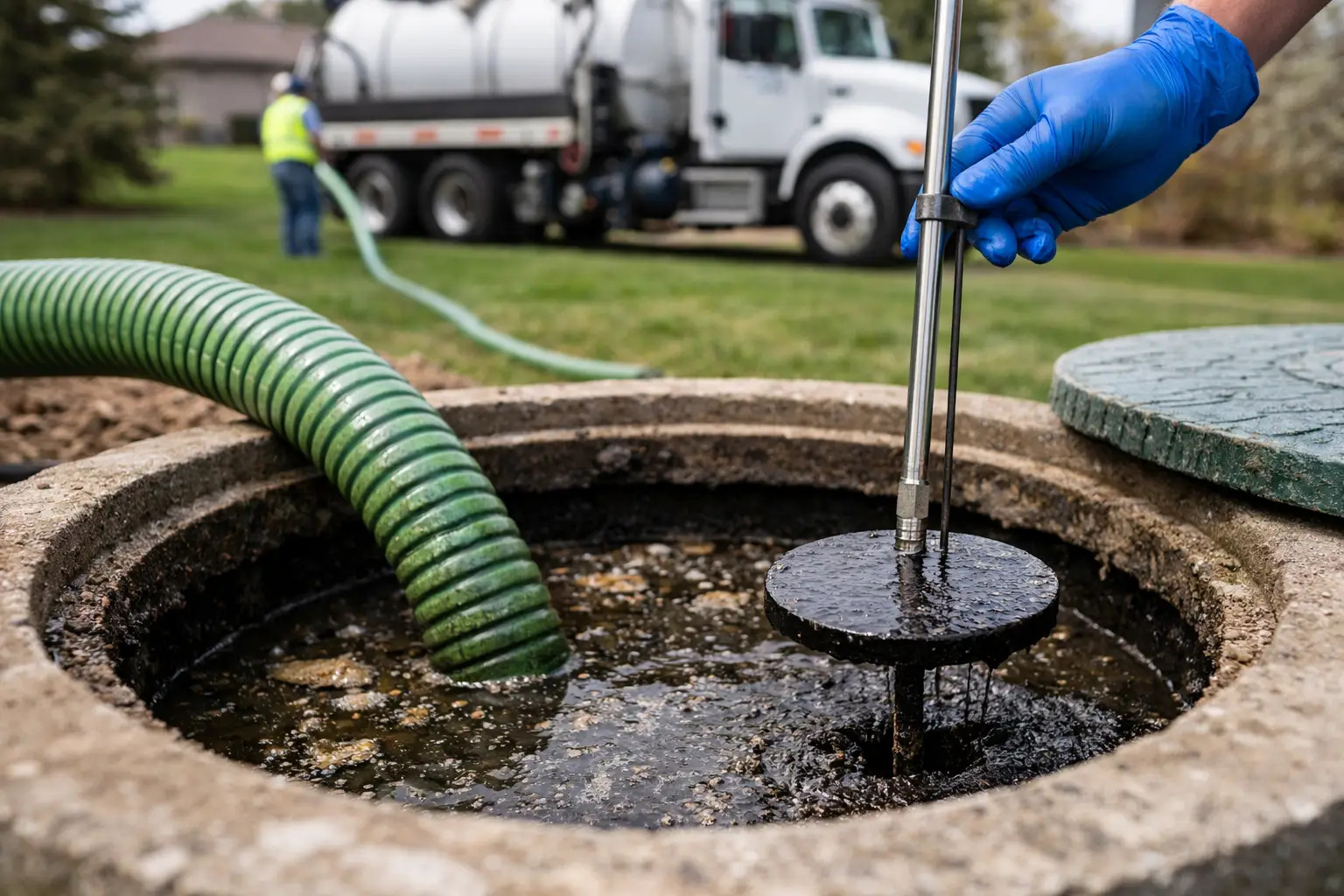
A septic tank can look quiet from the yard while it is getting close to a costly problem underground. Septic sludge level measurement gives homeowners a clear answer before wastewater backs up into a tub, a toilet drains slowly, or a drain field gets overloaded. It is one of the most useful ways to replace guesswork with a maintenance plan that fits your household and your system.
For eastern Idaho property owners, that matters. Rural homes, growing families, rental properties, and cabins can all put very different demands on a septic system. A tank that was fine two years ago may be approaching its limit now, especially after a change in occupancy, water use, or routine.
What septic sludge level measurement actually checks
A septic tank separates household wastewater into layers. Grease, soap residue, and lighter material rise to the top and form a scum layer. Heavier solids settle at the bottom as sludge. The clearer liquid in the middle flows out to the drain field.
During a septic sludge level measurement, a trained technician checks how much of the tank is occupied by the sludge and scum layers. The goal is not just to see whether there is material in the tank. Every working septic tank has solids. The question is whether those solids are taking up too much room and getting close to the outlet that leads to the drain field.
When solids build up too high, incoming wastewater has less time and space to separate. That raises the chance that solids will leave the tank and enter the drain field. Once a drain field is clogged with solids, pumping the tank alone may not reverse the damage. Measuring early is far less expensive than trying to repair a stressed or failed drain field later.
Why the pumping schedule is not the same for every home
You may hear that every septic tank should be pumped every three to five years. That is a reasonable starting point, but it is not a rule that fits every property. Tank size, household size, daily water use, garbage disposal use, and the age of the system all affect how quickly sludge accumulates.
A two-person household with a properly sized tank may go longer between pump-outs than a busy household with several children. A home that frequently hosts guests, runs many loads of laundry, or has an older undersized tank may need service sooner. Vacation homes are different too. Low occupancy can slow accumulation, but long periods without observation can allow a small issue to go unnoticed.
The right interval comes from the condition inside your specific tank, not from a calendar reminder alone. Measurement gives you that condition report. It can confirm that you have time left, show that pumping should be scheduled soon, or identify an urgent situation before it turns into a backup.
Scum matters, too
Homeowners often focus on the sludge at the bottom, but the floating scum layer matters just as much. If the scum layer becomes too thick, it can interfere with the tank inlet and outlet. A proper assessment considers both layers and the remaining clear space in the middle of the tank.
That is why checking through a small inspection opening or relying on a guess from the last service date is not always enough. A full assessment should provide a real look at what is happening inside the tank.
How professionals measure the sludge level
The tank must be opened safely to inspect it. This is not a do-it-yourself chore. Septic tanks can contain dangerous gases, and their lids and surrounding soil can be unstable. Never enter a septic tank or lean over an open access point.
A septic technician uses the proper tools to determine the depth of the scum layer, the depth of settled sludge, and the location of the tank outlet. Those readings show how much working liquid volume remains. The technician can also look for signs that deserve attention, such as a damaged baffle, a blocked effluent filter, an unusually high liquid level, or solids near the outlet.
If the measurements show the tank is nearing capacity, pumping is usually recommended during the same visit or scheduled promptly. If the levels are still well within a safe range, you get useful documentation and a better idea of when to check again. No pressure or guesswork – just a practical recommendation based on what is in the tank.
Warning signs that should not wait for a routine check
Sludge measurement works best as planned maintenance, but some symptoms call for an assessment right away. Slow drains throughout the home, gurgling toilets, sewage odors outdoors, wet or unusually green patches near the drain field, and water or sewage backing up into fixtures are all reasons to act quickly.
One slow sink may be a local plumbing issue. Several slow drains at once are more concerning because they can point to a full tank, a blocked line, or a drain field problem. Do not keep running water to “test” the issue. Extra water can make a backup worse and put more pressure on the system.
If wastewater is backing up or surfacing, treat it as an urgent sanitation issue. Keep people and pets away from the affected area, limit water use in the home, and arrange professional service. Open Range Septic Service provides emergency-ready local support when a septic concern cannot wait for a standard appointment.
What happens after the measurement
A good service visit should leave you knowing what was found and what comes next. If pumping is needed, the technician removes the accumulated contents of the tank and checks accessible components during the process. The tank is not simply emptied and forgotten. The condition of baffles, filters, lids, and visible piping can help explain whether routine maintenance is enough or whether another repair should be considered.
After pumping, it is normal for the tank to begin refilling with water as the household uses sinks, toilets, and appliances. It does not need to be filled with water on purpose in most situations. Your service provider can explain any exception based on your tank type, groundwater conditions, or local requirements.
Ask for clear findings after the visit. You should know whether the sludge and scum levels were high, whether components appeared to be in working order, and when to plan the next inspection or pump-out. Keeping a simple record of service dates and findings is especially helpful when selling a property, managing a rental, or inheriting an unfamiliar septic system.
Habits that help your tank stay on schedule
Measurement tells you where the system stands. Daily habits help keep the next service interval reasonable. The biggest factor is water. Spread laundry across the week when possible, repair running toilets, and avoid sending large volumes of water into the tank all at once. A septic system needs time to separate solids from liquid.
Be careful about what goes down drains and toilets. Human waste and toilet paper belong in the septic tank. Wipes, paper towels, feminine products, dental floss, cat litter, grease, medications, and harsh chemical cleaners do not belong there. Even products labeled “flushable” can create trouble in household plumbing and septic tanks.
A garbage disposal can also increase sludge buildup by sending food solids into the tank. It is not automatically off-limits, but households that use one heavily should expect more frequent monitoring and pumping. The same goes for homes with high water use or frequent guests.
Do not rely on additives to replace pumping. No bottle can remove the solids that have collected in the tank. Some additives can upset the normal balance inside the system or create a false sense of security. Regular assessment and pumping remain the straightforward answer.
Plan service before your system forces the issue
Septic systems usually give homeowners a chance to act before a failure, but that chance is easier to see with an accurate measurement. Scheduling an assessment is especially smart if you do not know when the tank was last pumped, recently bought the property, have added household members, or are noticing small changes in how drains perform.
A clean, well-documented service visit protects more than the tank. It helps protect the drain field, your yard, your home, and your budget. If you are unsure where your system stands, start with a professional measurement and a plainspoken explanation of the results. That small step can keep a routine pump-out from becoming an emergency call.