
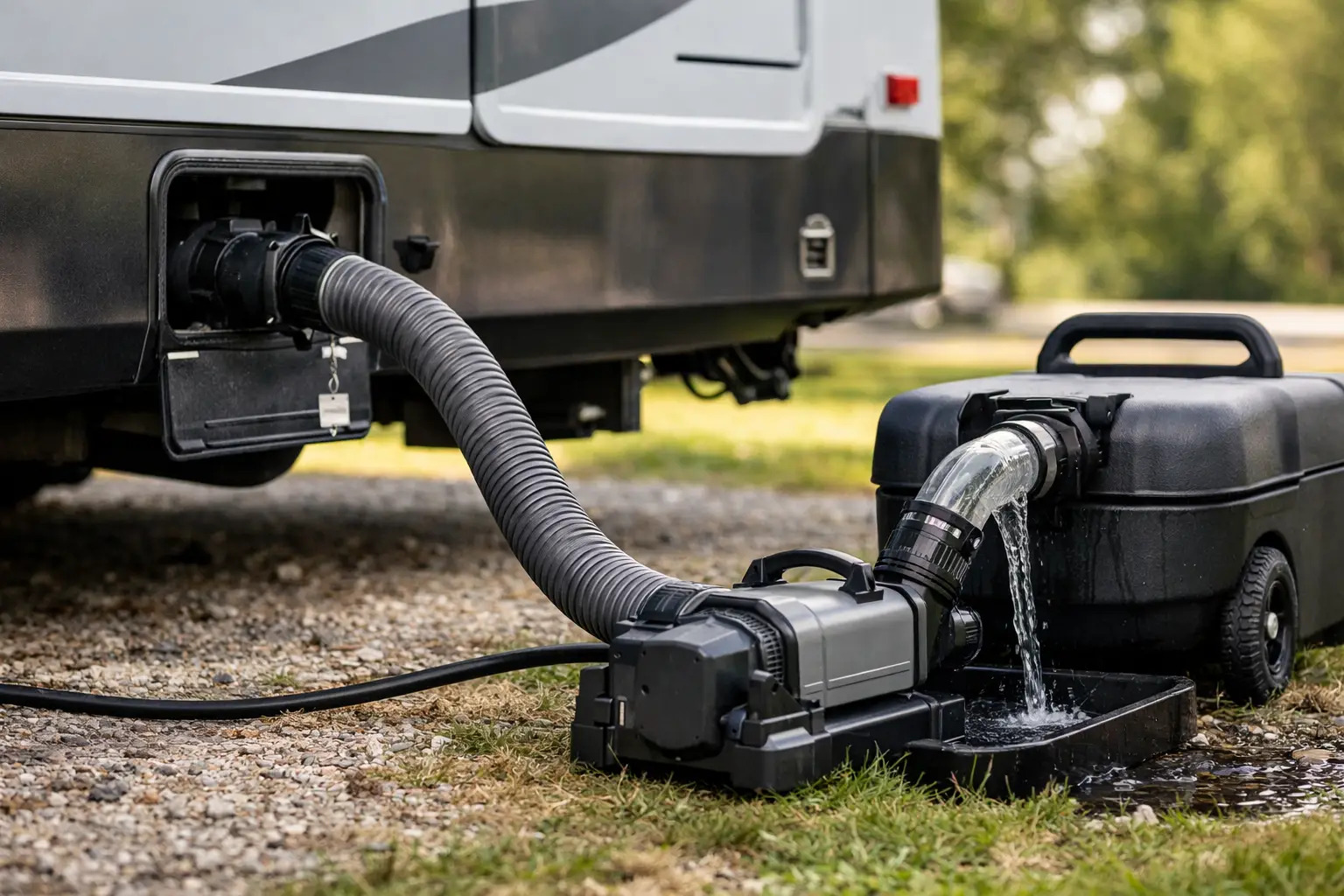
A full grey tank can turn a good RV trip into a messy problem fast. Water stops draining from the shower or kitchen sink, the tank gauge may read full, and every extra gallon has to go somewhere. RV grey water tank pumping gives you a clean, legal way to get the tank emptied when a dump station is unavailable, inaccessible, frozen, or simply too far away.
Grey water is not the same as black water, but it still needs proper handling. It can contain food particles, grease, soap, hair, cleaning products, and bacteria. Letting it overflow or drain onto the ground can create odors, attract pests, damage a campsite, and violate campground or local disposal rules. The right response is to stop adding water, assess the situation, and arrange professional pumping when the tank cannot be safely emptied at an approved dump point.
What RV Grey Water Tank Pumping Involves
A professional pump-out removes wastewater from the RV’s grey tank and transports it for approved disposal. The technician connects the appropriate hose and equipment to the RV’s waste outlet, pumps the tank carefully, and checks for issues that could affect draining, such as a blocked outlet, a closed valve, or a faulty tank sensor.
The work should be controlled from start to finish. A clean service area, secure hose connections, and proper cleanup matter just as much as getting the tank empty. If you are parked at a home, event site, fairground, work location, or remote property, the service team also needs a safe route to the RV and clear access to the waste connection.
In some cases, grey water is pumped along with a black tank. That is common when both tanks are nearing capacity or when the RV has been used for an extended stay. A technician can explain the best approach based on your tank setup, available access, and the condition of the system. No pressure or guesswork – just a clear plan for getting wastewater handled correctly.
Signs It Is Time to Schedule a Pump-Out
The clearest sign is water backing up into a shower pan or refusing to drain from the kitchen or bathroom sink. Do not assume the problem is always a plumbing clog. When the grey tank is full, the water has nowhere to go, and forcing more water down the drain will make the backup worse.
Odors around the RV can also point to a full tank, especially in warm weather. Grey tanks often smell worse than people expect because food residue and grease collect inside. A sour or sewer-like odor may also come from a dry drain trap, a vent issue, or a valve that is not sealing correctly, so it is worth having the situation assessed rather than guessing.
Watch for misleading tank gauges, too. Sensors inside RV tanks can become coated with soap residue, grease, toilet paper, or other buildup. A gauge that reads full after pumping may need cleaning or may simply be inaccurate. On the other hand, a gauge that says half-full does not prove you have plenty of capacity. Slow drains and a rising shower pan are more reliable warnings.
Eastern Idaho weather adds another consideration. Freezing temperatures can make dump-station access difficult and can affect exposed hoses, valves, and plumbing. If you are winter camping, staying in an RV during a home project, or using an RV as temporary housing, do not wait until the tank is completely full before making a plan.
Why Dumping Grey Water on the Ground Is a Bad Fix
It can be tempting to think shower or dish water is harmless because it did not come from the toilet. That shortcut causes problems. Dishwater carries grease and food waste, while bath water can contain soaps and personal-care products. Releasing it onto soil may leave standing water, contaminate the area, create unpleasant smells, and cause conflict with campground owners or neighbors.
Campgrounds, RV parks, and local jurisdictions often have their own wastewater rules. Even where someone claims ground disposal is allowed, conditions may be limited by location, soil, volume, and the type of water involved. When there is any doubt, use a permitted dump station or schedule pumping. Proper disposal protects the place you are staying and avoids an avoidable cleanup job.
What to Do Before the Service Truck Arrives
First, reduce water use. Skip showers, run no dishwasher or washing machine connections, and use disposable dishware if needed until the tank is empty. This keeps the problem from becoming an overflow.
Next, make the RV waste connection accessible. Move stored items away from the service bay, identify the grey-tank valve if you know it, and keep pets and children clear of the work area. If your RV is on a tight lot or behind a home, let the service provider know about gates, narrow driveways, soft ground, low branches, or other access concerns before the appointment.
You do not need to take apart fittings or attempt a repair unless you are confident it is safe to do so. A damaged valve or loose sewer cap can turn a manageable service call into a spill. If wastewater is already backing up into the RV or leaking outside, treat it as an urgent issue and ask for emergency help.
Keeping Your Grey Tank Easier to Manage
Good habits extend the time between pump-outs and reduce odors. Use plenty of water when washing dishes so grease and food particles move through the drain instead of settling in the tank. Wipe greasy pans before washing them, use sink strainers, and avoid sending coffee grounds, cooking oil, or food scraps down the drain.
A small amount of approved RV tank treatment can help control odor, but it is not a replacement for regular emptying. Avoid harsh drain chemicals unless the product is clearly safe for RV plumbing and holding tanks. Strong chemicals can damage seals, disrupt treatment systems, and create hazards for anyone pumping the tank later.
After emptying, rinse the tank if your RV has a built-in flushing connection or if your service provider recommends it. Rinsing can reduce residue that causes odors and unreliable sensors. Still, do not leave the grey valve open during a long-term hookup unless your RV manufacturer and campground rules specifically allow it. Keeping the valve closed lets enough water build up to carry solids and residue out when you dump.
When a Full Grey Tank May Be Part of a Larger Problem
If the tank fills much faster than expected, check how the RV is being used. Long showers, frequent laundry, hand-washing dishes, and multiple occupants can fill a small grey tank in a day or two. That may be normal for the tank size, especially during a longer stay.
But repeated backups after pumping deserve a closer look. The outlet line may be obstructed, a valve may not be opening fully, plumbing may be connected incorrectly, or the tank itself may have a damaged fitting. If the RV is parked at a home with a sewer connection, the issue could also be on the connection side rather than inside the RV. Accurate assessment saves time and prevents throwing money at the wrong repair.
For RV owners across eastern Idaho, Open Range Septic Service provides local pump-out help with clear communication, careful work, and emergency availability when wastewater cannot wait. A quick call with your RV location, tank condition, and access details helps the team prepare the right equipment before arriving.
A grey tank does not have to become a trip-ending problem. Handle the warning signs early, keep wastewater out of the ground, and get qualified help when the normal dump-station plan falls through. That leaves you with a clean RV, a clean site, and one less thing to worry about.