A septic backup rarely starts with one dramatic mistake. More often, it begins with a few “flushable” wipes, leftover cooking grease, too much toilet paper, or a product that seemed harmless at the time. Knowing what not to flush into your septic system helps protect the tank, drainfield, plumbing, and the ground around your eastern Idaho home.
Your septic system is built to handle a limited job: wastewater, human waste, and normal amounts of septic-safe toilet paper. Everything else can interfere with the bacteria inside the tank, build up as sludge, clog pipes, or move out toward the drainfield where repairs become more complicated and expensive.
What Not to Flush Into a Septic System
The simplest rule is this: if it is not human waste or toilet paper, keep it out of the toilet. A septic tank is not a trash can, and a label that says “flushable” does not always mean a product breaks down fast enough for a septic system.
Wipes, towels, and hygiene products
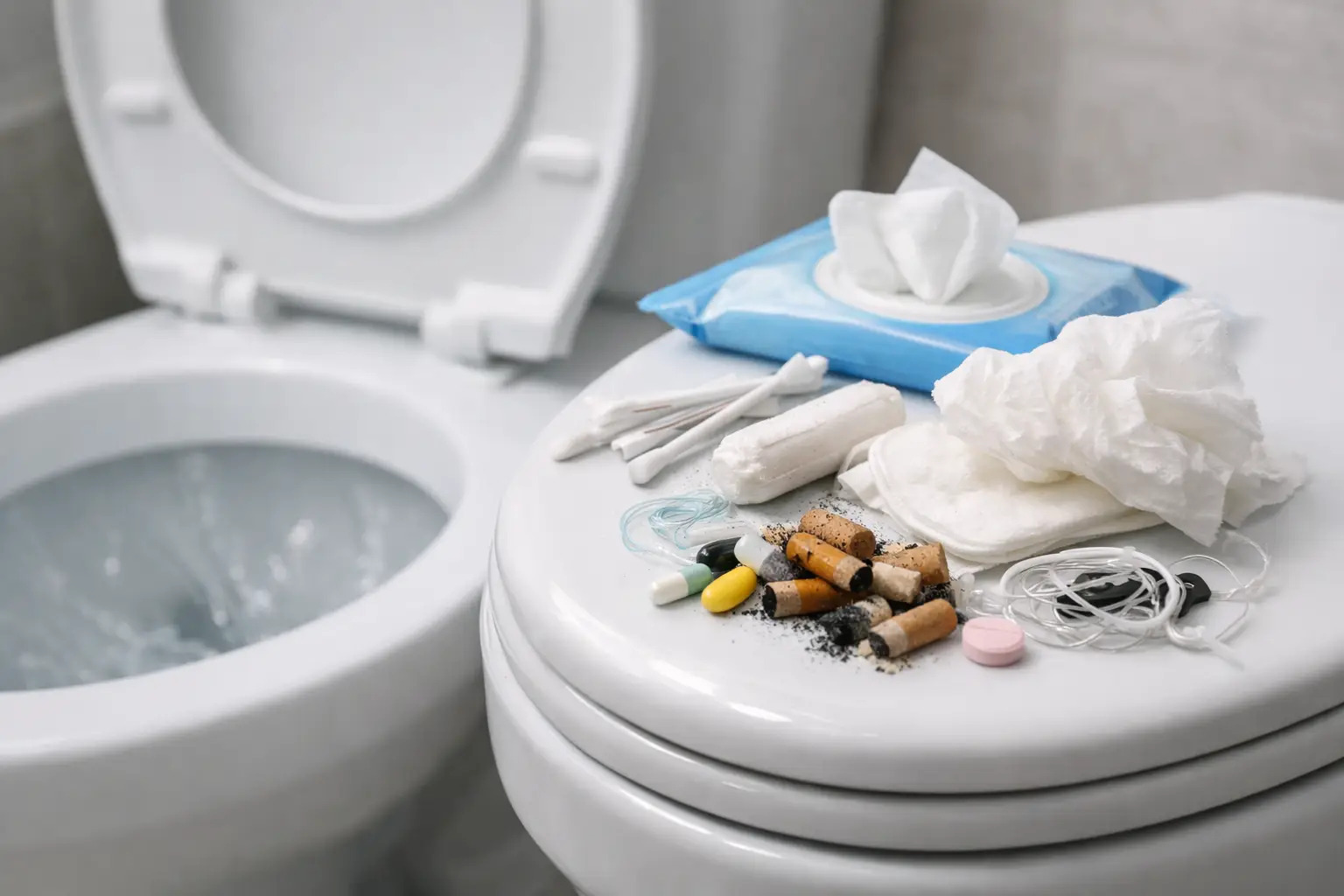
Baby wipes, cleaning wipes, disinfecting wipes, cosmetic wipes, and so-called flushable wipes are among the most common causes of clogs. They may travel through some plumbing, but they do not break down like toilet paper. In a septic tank, they can collect at the inlet, wrap around components, or add to the solid layer that needs to be pumped out.
Paper towels, facial tissues, napkins, cotton balls, dental floss, and dryer sheets create similar problems. They hold together longer than toilet paper and can catch on pipe fittings or tank baffles. Put them in the trash instead.
Feminine hygiene products, diapers, condoms, and incontinence products should never go down the toilet. These materials are designed to absorb moisture or remain intact. Once flushed, they can swell, snag, and block flow quickly.
Grease, oil, and food waste
Cooking grease may look liquid when it goes down a warm drain, but it cools and thickens inside plumbing and the septic tank. Over time, grease can coat pipes, contribute to scum buildup, and make pumping more difficult. Let grease cool in a container, then throw it away.
Food scraps are also hard on a septic system, especially when a garbage disposal sends them down the drain. Eggshells, coffee grounds, rice, pasta, vegetable peels, and meat scraps all add solids to the tank. Some break down slowly; others expand or settle into a dense layer of sludge.
A garbage disposal is not automatically off-limits for every household, but it does mean the tank will usually need pumping more often. If your home has a smaller tank, a large family, or a system with a history of slow drains, limiting disposal use is the safer choice. Composting or trashing food waste keeps unnecessary solids out of the system.
Harsh chemicals and household cleaners
Septic tanks rely on naturally occurring bacteria to start breaking down waste. Strong chemicals can disrupt that balance, especially when they are poured down the drain in large amounts.
Avoid flushing or draining paint, paint thinner, solvents, gasoline, motor oil, pesticides, pool chemicals, photographic chemicals, and strong industrial-style cleaners. These products can damage the helpful bacteria in the tank and may contaminate the soil or groundwater if they reach the drainfield.
Normal household use of a toilet cleaner, mild dish soap, or a reasonable amount of laundry detergent is generally not a problem. The concern is concentrated chemicals and repeated overuse. If a product is labeled hazardous waste, it does not belong in your septic system.
Be cautious with drain cleaners, too. A harsh chemical cleaner may seem like a quick fix for a slow drain, but it can damage plumbing, upset tank bacteria, and fail to solve the real blockage. A plunger or drain snake may be a better first step. If multiple drains are slow, toilets gurgle, or wastewater is backing up, the issue may be in the septic system rather than one fixture.
Medication and personal-care products
Do not flush prescription medication, over-the-counter medicine, vitamins, or supplements. Wastewater treatment inside a septic system does not reliably remove all pharmaceutical compounds. Use a local medication take-back option when available, or follow disposal instructions provided by the pharmacy or manufacturer.
Personal-care products such as floss picks, razors, contact lenses, makeup pads, cotton swabs, and hair should stay out of toilets and sinks. They do not belong in the tank, and many can create clogs before they ever get there.
Cat litter and aquarium waste
Even litter marketed as flushable can cause trouble. Clay litter absorbs water and becomes heavy, while clumping litter can expand and harden. Neither is friendly to pipes, pumps, or the tank. Cat waste can also carry parasites that septic systems are not designed to remove completely.
Aquarium gravel, sand, and fish-tank debris should also go in the trash. Sand settles in a septic tank and takes up valuable capacity. Unlike organic solids, it does not break down between pump-outs.
Why These Items Cause Bigger Septic Problems
A healthy septic system separates wastewater into layers. Solids settle to the bottom as sludge, fats and oils float as scum, and clearer liquid moves toward the drainfield. Bacteria help reduce some organic waste, but they cannot make wipes, plastic, floss, grease, or chemicals disappear.
When too many solids build up, there is less room in the tank for wastewater. Solids can move toward the outlet and into the drainfield, where they may clog soil and restrict drainage. That is when homeowners may notice wet ground, sewage odors, slow drains, gurgling toilets, or wastewater backing up into the house.
The drainfield is usually the expensive part to repair or replace. Regular pumping removes accumulated sludge before it reaches that point. Good flushing habits help, but they do not replace maintenance. Every home is different, so the right pumping interval depends on tank size, household size, water use, garbage disposal use, and the condition of the system.
Watch What Goes Down Every Drain
Toilet habits get most of the attention, but kitchen, bathroom, and laundry drains all lead to the septic tank. Keep grease and food out of the kitchen sink. Use a hair catcher in showers. Avoid dumping mop water filled with harsh cleaners, and spread laundry loads across the week instead of running many back-to-back loads in one day.
Water volume matters because the tank needs time to separate solids from liquid. A sudden flood of water can push material through before it has settled properly. This is especially worth remembering when guests visit, during holiday weekends, or when an RV is connected to a home system.
For RV owners, black and gray tanks need the same common-sense approach. RV-safe toilet paper can help, but wipes, grease, feminine products, and chemicals still do not belong in either tank. Proper pump-out service prevents avoidable clogs and keeps waste where it belongs.
When to Call for Septic Help
Call for an assessment if you have recurring slow drains, gurgling fixtures, sewage odors, wet or unusually green spots over the drainfield, or a backup in a tub, shower, or toilet. Do not keep flushing in hopes that the problem clears itself. Extra water can make a backup worse.
If a septic tank has not been pumped in several years, or you do not know its service history, measuring the sludge and scum levels is a practical place to start. It gives you real information about what the system needs without pressure or guesswork.
Open Range Septic Service provides pumping, inspections, sludge-level measurement, and emergency support for homeowners and RV owners across eastern Idaho. A clear assessment and careful service can prevent a small warning sign from becoming a messy weekend problem.
A trash can beside each toilet, a grease container near the stove, and a regular maintenance schedule are simple habits that protect your system year after year. Your septic tank works quietly when it is treated right – and that is exactly how it should stay.