
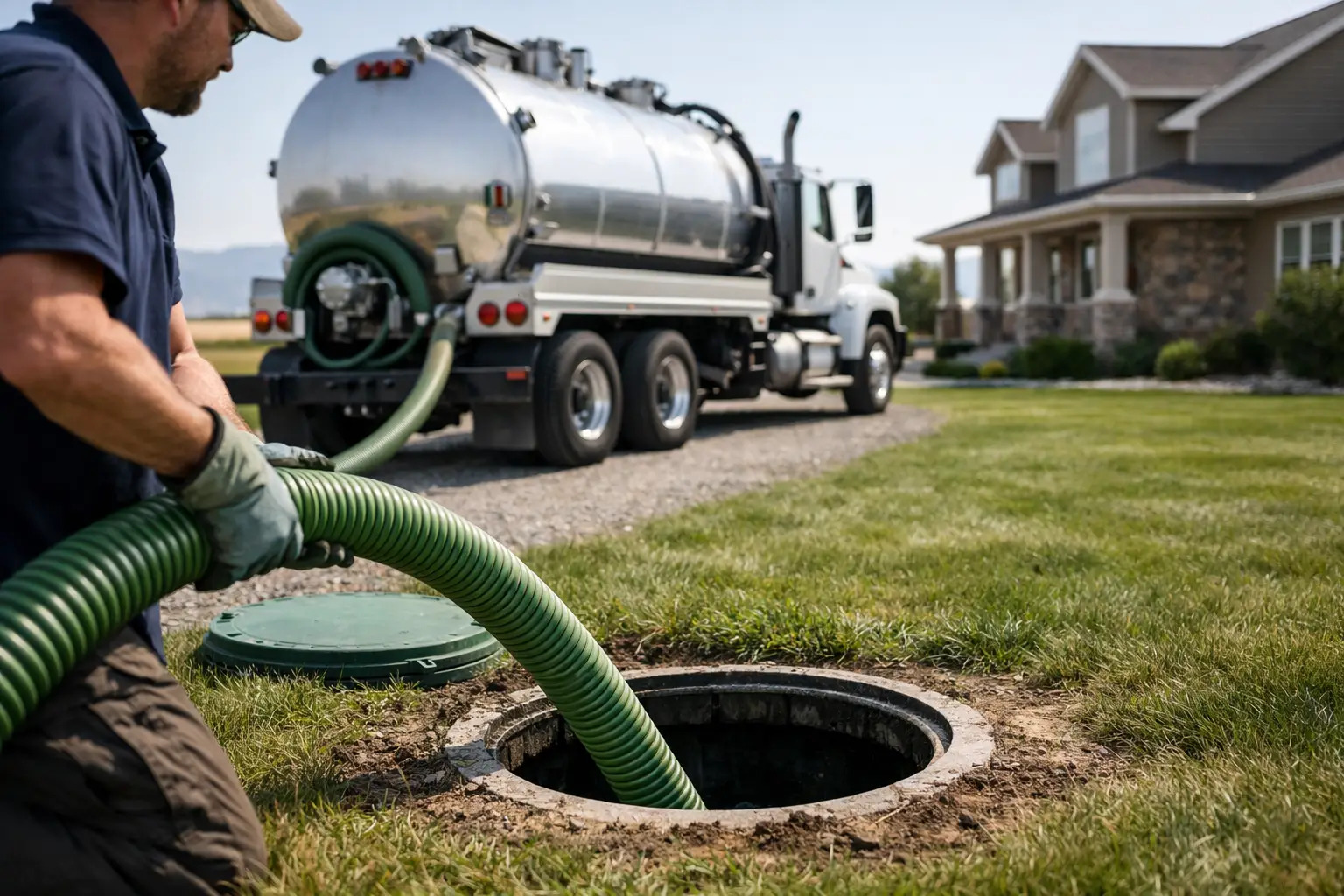
A septic tank rarely chooses a convenient time to get full. It may be a slow-draining shower before guests arrive, a wet patch near the drainfield after a spring thaw, or a toilet that suddenly gurgles when the washer drains. When those signs show up, septic tank pumping Blackfoot property owners can rely on should be prompt, careful, and based on what the system is actually doing – not guesswork.
A pump-out is routine maintenance, but it protects one of the most important systems on your property. Staying ahead of the tank helps prevent backups, protects the drainfield, and gives you a chance to spot concerns before they become an expensive repair.
Why septic tanks need regular pumping
Your septic tank separates wastewater into layers. Solids settle to the bottom as sludge, lighter materials such as grease rise to the top as scum, and the liquid in between flows out to the drainfield. The tank is designed to hold and separate those materials, not store solids forever.
As sludge and scum build up, there is less room for wastewater to settle properly. Eventually, solids can move toward the outlet and into the drainfield. That is where a missed maintenance visit can become a bigger problem. Drainfields are costly and disruptive to repair, while routine pumping is a straightforward way to reduce the risk.
For many households, pumping every three to five years is a reasonable starting point. But there is no single schedule that fits every Blackfoot home. A family of six, frequent guests, a garbage disposal, laundry-heavy routines, and an undersized tank can all fill a system faster. A lightly used home with a larger tank may need service less often. Measuring sludge levels and reviewing the tank’s condition gives a more useful answer than relying only on the calendar.
Signs you may need septic tank pumping in Blackfoot
Do not wait for sewage to appear in the yard before taking action. Many septic systems give early warnings, and responding to them quickly can limit damage and stress.
Slow drains throughout the home are one common sign. A single slow sink may be a local plumbing clog, but slow toilets, tubs, and sinks at the same time can point to a full tank or a restriction farther down the system. Gurgling drains, toilet bubbles, and odors around the tank or drainfield also deserve attention.
Watch the ground as well. Soggy soil, unusually green grass, or standing water near the drainfield can mean wastewater is not moving through the system as it should. In eastern Idaho, seasonal moisture and frozen ground can complicate the picture, so the cause is not always an overfull tank. A proper assessment helps separate a maintenance need from a drainfield, pipe, or plumbing issue.
If wastewater is backing up into a shower, tub, or floor drain, treat it as an urgent situation. Stop using water if possible, keep people and pets away from affected areas, and call for emergency septic service. More flushing, more laundry, or repeated use of chemical drain cleaners will not solve a full septic tank.
What a careful pump-out should include
A septic appointment should be more than opening a lid, removing waste, and leaving. The right process starts with a conversation about the symptoms, household use, system history, and access to the tank. For a property owner who has never dealt with septic service before, clear explanations matter.
After locating and accessing the tank, the technician checks the levels of scum and sludge, pumps the contents thoroughly, and looks for visible concerns with components that can be safely evaluated during service. That may include baffles, lids, risers, inlet and outlet areas, and signs of damage or unusual conditions inside the tank.
The work should finish with the site left clean and access covers secured. You should also receive a plain-language explanation of what was found and practical guidance for the next service interval. No surprises, no shortcuts. If a tank is in good condition, you deserve to hear that. If there is a concern, you deserve real answers about what it means and what should happen next.
Open Range Septic Service LLC provides that kind of local, licensed service for Blackfoot-area homeowners, including scheduled pumping, tank measurement, inspections, and emergency response when the system cannot wait.
How to prepare for your septic service visit
A little preparation can make the visit quicker and more accurate. If you know where the tank is, clear vehicles, trailers, firewood, landscaping items, or other obstacles from the area. Marking the approximate location is helpful, especially on larger rural properties. If the tank has risers, make sure the lids are accessible.
It also helps to share what you have noticed. Tell the technician whether drains are slow, when the problem started, whether it affects the whole house, and when the tank was last pumped. If you have inspection reports, permits, or a diagram of the system, keep them available. Even partial information can help build a clearer picture.
There is no need to aggressively conserve water for days before a standard maintenance pump-out. However, if you are dealing with active backup or standing wastewater, reduce water use until the system is assessed. That protects the home and prevents adding more volume to an already stressed system.
Habits that help protect your tank and drainfield
Pumping is essential maintenance, but daily habits matter too. Your septic system works best when only wastewater and toilet paper go down the drains. Wipes labeled flushable, paper towels, feminine products, dental floss, cat litter, and grease can create clogs or add unnecessary solids to the tank.
Water use deserves attention as well. One extra-long shower is usually not the issue. Repeated heavy water use in a short period can be. Spreading laundry over several days, repairing leaking toilets, and avoiding multiple high-volume tasks at once gives the tank and drainfield time to do their job.
Be careful with the area over the tank and drainfield. Do not drive or park heavy equipment there, build permanent structures on it, or plant deep-rooted trees close by. Keep roof drains and surface runoff directed away from the drainfield. Extra water in that area can make it harder for treated wastewater to move into the soil.
Septic additives are another place to use common sense. Most healthy residential systems do not need routine additives to replace regular pumping. Some products make claims that sound appealing but do not remove accumulated solids. When in doubt, ask about your specific system rather than pouring a product into the tank and hoping for a shortcut.
When pumping is not the whole answer
A full tank can cause problems, but pumping does not repair every septic issue. If drains stay slow after service, wastewater returns quickly, or the drainfield remains wet, further evaluation may be needed. A broken baffle, blocked line, damaged filter, plumbing obstruction, or drainfield failure can produce similar symptoms.
That is why a service provider should avoid promising a one-size-fits-all fix before seeing the system. The best next step depends on the tank levels, the condition of the components, the age of the system, soil conditions, and the symptoms at the property. Accurate assessment protects you from paying for work that does not address the real problem.
Keep maintenance on your schedule
The easiest septic emergency to handle is the one you never have. If you cannot remember the last pump-out, have recently bought a home, or notice early warning signs, scheduling an assessment now is a practical move. Keep the service record with your home documents and set a reminder based on the recommended interval.
Your septic system works quietly when it is maintained well. Give it the attention it needs, and it can keep serving your Blackfoot home without pressure or guesswork.