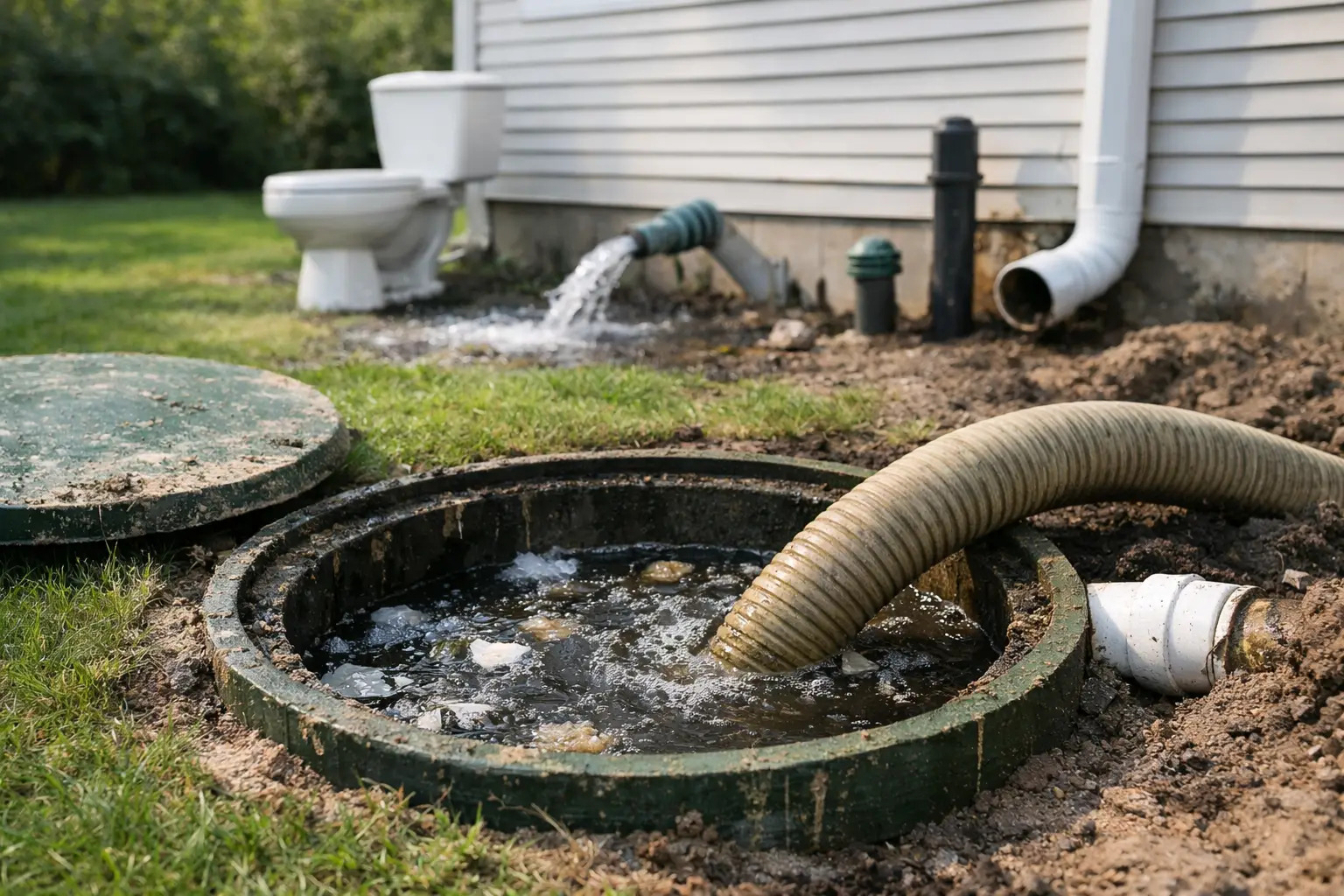
A septic backup rarely starts with a dramatic mess. More often, it begins with a toilet that gurgles, a shower that drains slowly, or a patch of unusually green grass near the drainfield. If you are asking what causes septic tank backup, those early signs are your system telling you that wastewater is no longer moving where it should.
The right response depends on where the blockage or failure is happening. Sometimes the answer is as straightforward as a full tank that needs pumping. Other times, the issue is in a household drain, an outlet filter, a damaged pipe, or the drainfield itself. Acting early can help keep a service call simple and protect your home, yard, and system.
What Causes Septic Tank Backup in a Home?
A septic system works by separating solids from wastewater inside the tank. Solids settle to the bottom as sludge, oils and floating material form a scum layer on top, and the liquid wastewater flows out to the drainfield for final treatment in the soil.
A backup happens when that flow is interrupted or when the system cannot handle the amount of wastewater coming into it. The wastewater then has nowhere to go except back through the plumbing fixtures in the house or up into the yard.
1. The septic tank is overdue for pumping
This is one of the most common causes. Every septic tank has a limited working capacity. As sludge and scum build up, they take up space that should be available for wastewater. Eventually, solids can reach the outlet, restrict flow, or move toward the drainfield.
There is no single pumping schedule that fits every property. A household with several people, frequent laundry, a garbage disposal, or a smaller tank may need service more often than a lightly used home. Many homes benefit from a professional measurement and pumping schedule every three to five years, but actual tank levels are more useful than guessing by the calendar.
Waiting until plumbing backs up is costly maintenance. Pumping removes accumulated material before it turns into an urgent problem.
2. A clogged inlet, outlet, or effluent filter
Wastewater enters and leaves the tank through baffles or tees designed to keep floating scum and settled solids inside. If the inlet is blocked, wastewater from the home cannot enter the tank properly. If the outlet or effluent filter is clogged, liquid cannot move from the tank to the drainfield.
An effluent filter is doing its job when it catches small solids. But it needs periodic cleaning as part of septic maintenance. Ignoring it can create slow drains and backups even when the tank is not completely full.
A professional inspection can identify whether the restriction is at the tank, in the building sewer line, or farther out in the system. That matters because pumping alone may not solve a blocked filter or damaged line.
3. Too much water enters the system at once
Septic systems are designed for normal household water use, not a sudden flood of water. Several loads of laundry in one day, long showers, guests staying over, or a running toilet can send more water into the tank than the drainfield can absorb.
High water use does not always cause an immediate backup in a healthy system, but it can expose a system that is already close to its limit. You may notice drains slowing down after heavy laundry days, then recovering later. That pattern is worth checking before it becomes a full backup.
Spread water-heavy chores across the week when possible. Fix leaking toilets and faucets promptly. A toilet that runs continuously can quietly add hundreds of gallons of unnecessary water to the system.
4. Drainfield saturation or failure
The drainfield is where treated wastewater disperses into the soil. When the soil is too wet, compacted, frozen, damaged, or clogged with biomat buildup, it cannot accept wastewater at the necessary rate. The tank may fill higher than normal, and the plumbing can back up.
Eastern Idaho weather can play a role. Spring snowmelt, heavy rain, and high groundwater can temporarily saturate the ground around a drainfield. A system that works normally during dry periods may struggle when the soil is already holding too much water.
Long-term drainfield failure is different from a temporary wet-weather slowdown. Signs can include sewage odors outdoors, wet or spongy ground above the drainfield, unusually lush strips of grass, and repeated backups soon after pumping. In that situation, a careful evaluation is needed. Pumping can provide short-term relief, but it does not repair a drainfield that can no longer accept effluent.
5. Flushing materials a septic system cannot process
Toilets are not trash cans. Wipes labeled “flushable,” paper towels, facial tissue, feminine products, cotton swabs, dental floss, diapers, and similar items do not break down like toilet paper. They can catch in pipes, clog filters, build up in the tank, and interfere with pumps in systems that use them.
Kitchen habits matter too. Grease, cooking oil, coffee grounds, and food scraps can add to the scum layer or cause blockages. A garbage disposal increases the solid load in a septic tank, which often means more frequent pumping is needed.
The safest habit is simple: flush only human waste and septic-safe toilet paper. Put grease in a container for the trash after it cools, rather than sending it down the kitchen drain.
6. Tree roots or a damaged sewer line
Roots seek moisture, and a small crack in an older sewer line can attract them. Once roots enter, they can catch paper and waste until the pipe is partially or fully blocked. Shifting soil, freezing conditions, vehicle traffic, poor installation, and age can also crack, crush, or separate underground pipes.
A line problem often affects one part of the home first. For example, a lower-level shower or toilet may back up while fixtures farther away still seem normal. A septic professional can inspect the tank and assess whether the issue appears to be before the tank, at the tank, or beyond it.
Do not assume every backup is a tank problem. A plugged building sewer line and an overfull septic tank can create similar symptoms, but they require different work.
7. Improper drainfield use or physical damage
Drainfields need open, uncompacted soil to do their work. Parking vehicles, storing heavy equipment, building structures, or repeatedly driving across the area can compact soil and damage buried components. Routing roof runoff, sump pump discharge, or surface drainage toward the drainfield can overload it with clean water it was never meant to handle.
Keep the drainfield area clear and know where it is before planning landscaping, fencing, or construction. Grass is generally a good cover because it helps prevent erosion without deep root systems. Deep-rooted trees and shrubs belong well away from septic components.
8. Mechanical problems in advanced systems
Some properties use pumps, alarms, floats, or other components to move wastewater. A power outage, failed pump, stuck float, tripped breaker, or alarm problem can stop that movement and lead to a backup.
If your system has an alarm, treat it as an early warning. Reduce water use right away and arrange service. Do not silence the alarm and continue normal water use. The system may be holding wastewater that has nowhere to go.
Signs You Should Stop Using Water and Call
A single slow sink may be a small drain clog. Multiple fixtures acting up at the same time is more concerning, especially if toilets gurgle when the washing machine drains or water comes up in a tub or shower. Sewage odors, wet ground around the tank or drainfield, and wastewater appearing outside also call for prompt attention.
If sewage is backing up indoors, stop running water. Do not flush toilets, run the dishwasher, shower, or start laundry. Keep people and pets away from wastewater, since it can carry harmful bacteria. Avoid opening the septic tank yourself. Tank gases and unsafe conditions make this work best handled by trained professionals.
What to Expect From a Septic Assessment
A proper service visit should do more than remove waste and leave. The technician should assess tank levels, look at the condition of accessible components, check for signs of a restricted outlet or filter, and explain what the findings mean. If the symptoms point to a drainfield, line, or mechanical issue, you should get a clear explanation of the next practical step without pressure or guesswork.
For eastern Idaho homeowners, Open Range Septic Service can provide a local assessment, careful pumping, and straightforward guidance when a backup has you wondering what to do next. The goal is real answers, a clean work area, and no shortcuts.
A septic system usually gives warning before it fails completely. Pay attention to changes in your drains, keep routine maintenance on schedule, and call for help early enough to protect the system you rely on every day.