
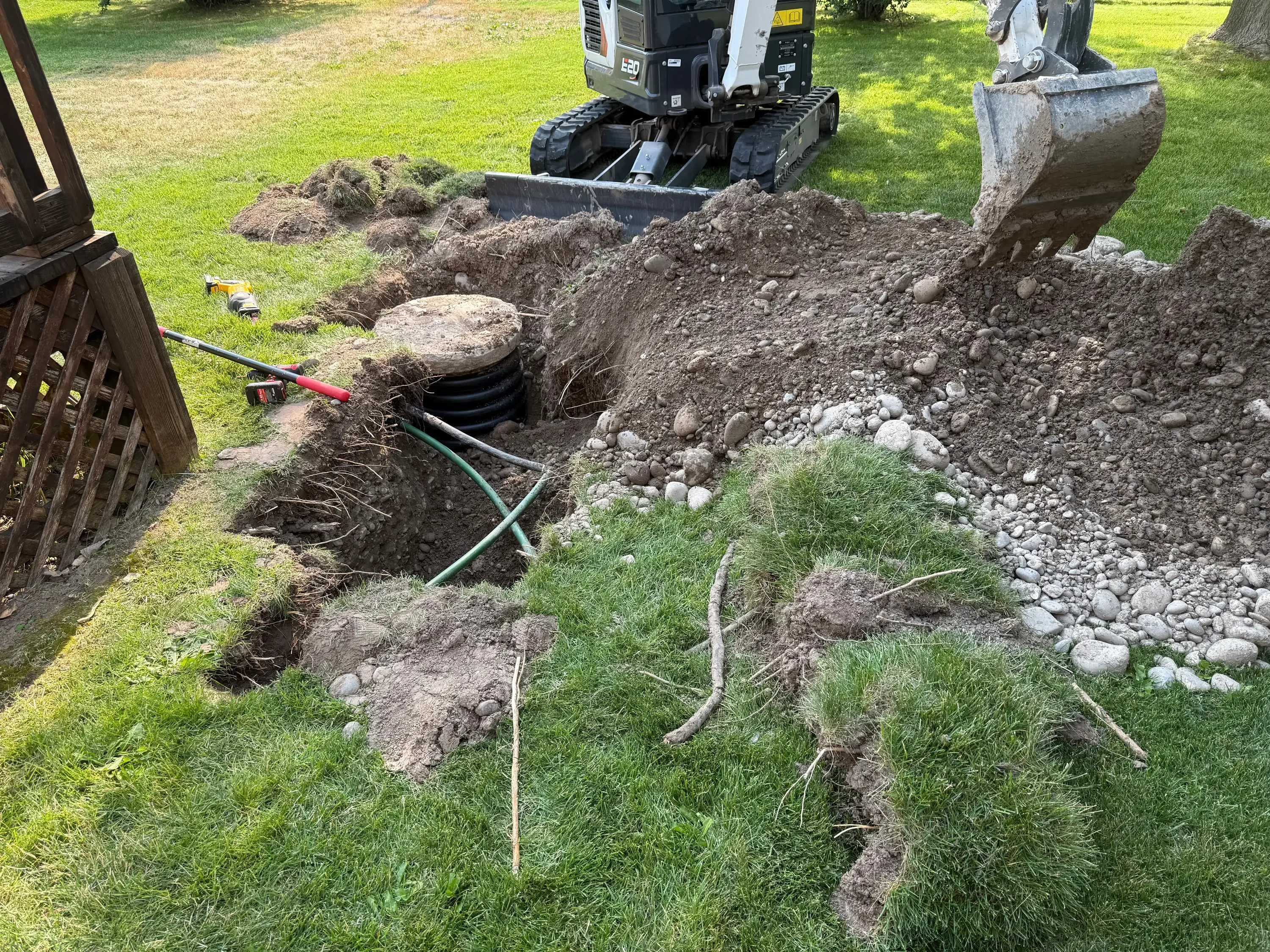
A hard rainstorm can turn a normally quiet septic system into a stressful problem fast. So, can heavy rain flood a drainfield? Yes. Heavy rain, rapid snowmelt, or high groundwater can saturate the soil around and below a drainfield, leaving wastewater with nowhere to go.
That does not always mean the septic tank itself is broken. Often, the drainfield is temporarily overwhelmed by water already in the ground. But if sinks gurgle, toilets drain slowly, sewage backs up, or water stands over the drainfield, treat it seriously. A little caution early can prevent a messy backup inside the house and protect your property.
What heavy rain does to a septic drainfield
A drainfield works because wastewater leaves the septic tank and slowly filters through unsaturated soil. The soil is doing real work: it absorbs the liquid, filters contaminants, and allows treated water to move safely away.
After prolonged rain, that soil can fill with water. Once the spaces between soil particles are full, effluent cannot move through the ground at its normal rate. The tank may continue receiving water from showers, laundry, toilets, and dishwashing, but the drainfield has lost its capacity to accept it.
In eastern Idaho, conditions vary widely from one property to the next. A home on well-draining sandy soil may recover quickly. A property with clay-heavy soil, a shallow water table, compacted ground, poor grading, or spring runoff moving across the yard may have trouble after even a shorter storm. Snowmelt can create the same problem, sometimes more gradually and for a longer period.
A flooded drainfield is not always visible. You may not see a pond of water in the yard. The first sign may be slow fixtures inside the home because wastewater is no longer leaving the tank and drainfield as it should.
Signs your drainfield may be saturated
Pay attention to patterns, especially if they begin during or soon after heavy weather. One slow sink can be a simple drain clog. Several fixtures draining slowly at once points more toward a septic-system issue.
Common warning signs include toilets that flush sluggishly or bubble, drains that gurgle, sewage odors outdoors or indoors, wet or unusually soft ground over the drainfield, and wastewater surfacing in the yard. Grass over the drainfield may also look unusually green or grow faster than the surrounding lawn because it is receiving extra moisture and nutrients.
A sewage backup in a shower, tub, or floor drain is an urgent sign. Wastewater typically finds the lowest available opening first. Stop using water immediately and arrange for professional help. Keep children, pets, and vehicles away from any wet area that may contain wastewater.
What to do when heavy rain floods a drainfield
The goal is simple: stop adding water to a system that cannot release it and keep surface water from making the situation worse.
First, cut water use as far as possible. Postpone laundry, long showers, dishwasher cycles, baths, and unnecessary flushing. Use the toilet only when needed. This is not a permanent fix, but reducing flow gives the drainfield the best chance to recover as the ground dries.
Next, keep rainwater away from the septic area. Gutters, downspouts, sump-pump discharge, driveway runoff, and irrigation should not send water toward the tank or drainfield. If a downspout empties near the system, extend it so water flows to a suitable area away from the drainfield. Do not direct water onto a neighbor’s property or create erosion in the process.
Do not drive, park, stack firewood, or place heavy equipment over the drainfield. Wet soil compacts easily, and vehicle weight can damage pipes or crush the soil structure that allows wastewater to filter. Even after the surface looks dry, the ground below may still be saturated.
Avoid opening the septic tank or attempting a do-it-yourself repair. Septic tanks contain dangerous gases, and a flooded system needs a clear diagnosis, not guesswork. A licensed septic professional can assess tank levels, check for obvious restrictions, and help separate a weather-related saturation issue from a clogged line, failing pump, damaged baffle, or overloaded tank.
Should you pump the tank after a storm?
Sometimes pumping is the right move, especially when the tank is overfull or wastewater is backing up toward the home. Pumping creates temporary storage room and can reduce the immediate risk of an indoor sewage backup.
But pumping alone does not dry out a flooded drainfield. If the soil remains saturated, normal water use can fill the tank again quickly. That is why a good service visit includes more than simply removing waste. The technician should look at the timing, water use, tank condition, drainage conditions, and symptoms on the property.
There is a trade-off here. Waiting too long with an overfull tank risks a backup. Pumping without addressing runoff, excessive water use, or a field that is failing can mean the problem returns. Real answers come from assessing the whole system, not selling a one-size-fits-all fix.
When rain reveals a bigger septic problem
A healthy drainfield can be temporarily stressed by an exceptional storm and then return to normal as the soil drains. If problems disappear after a few dry days and do not return, weather may have been the main cause.
Repeated trouble is different. If every significant rain causes slow drains, odors, or wet spots, the system may have an underlying issue. The drainfield could be undersized for the household, nearing the end of its service life, damaged by roots or traffic, or receiving too much water from leaks and high-use appliances. A tank that has gone too long without pumping can also send excess solids toward the drainfield, reducing its ability to absorb wastewater.
Watch for a pattern after dry weather, too. If drains remain slow when the ground is dry, or if sewage appears at the surface more than once, do not assume the next sunny day will solve it. A professional inspection can identify whether the problem is in the house plumbing, septic tank, pump chamber, distribution components, or drainfield.
How to lower the risk before the next storm
You cannot control Idaho weather, but you can reduce how much water reaches your septic system. Keep roof runoff and sump discharge away from the drainfield. Repair leaking toilets and faucets promptly. Spread laundry across the week instead of running several loads in one day, particularly when the ground is already wet.
Routine pumping and sludge-level measurement matter as well. A tank is designed to separate solids from liquid. When solids build up too high, they can move out of the tank and into the drainfield, where they can cause long-term damage. Maintenance does not prevent every rain-related issue, but it gives the system its best working conditions.
Know where your tank and drainfield are located before an emergency. Mark them on a property sketch, and make sure anyone who maintains the yard knows not to drive over the drainfield or alter drainage around it. If you are buying or selling a home, a certified septic inspection can reveal concerns that are easy to miss from the surface.
When to call for septic help
Call promptly if wastewater backs up into the home, sewage is surfacing outside, toilets will not flush normally, or you smell persistent sewage near the tank or drainfield. These are not problems to wait out while continuing normal water use.
For slower drains after a storm, reduce water use and monitor the system closely. If it does not improve as conditions dry, or if the same problem returns after each heavy rain, schedule an assessment. Open Range Septic Service provides straightforward evaluation, pumping, measurement, and emergency response across eastern Idaho, with clear findings and no pressure or guesswork.
A saturated drainfield can feel like an emergency because it often happens when the weather is already making everything harder. Take the load off the system, keep runoff away, and get a knowledgeable set of eyes on recurring symptoms. A quick, careful response can protect your home now and help your septic system recover the right way.